
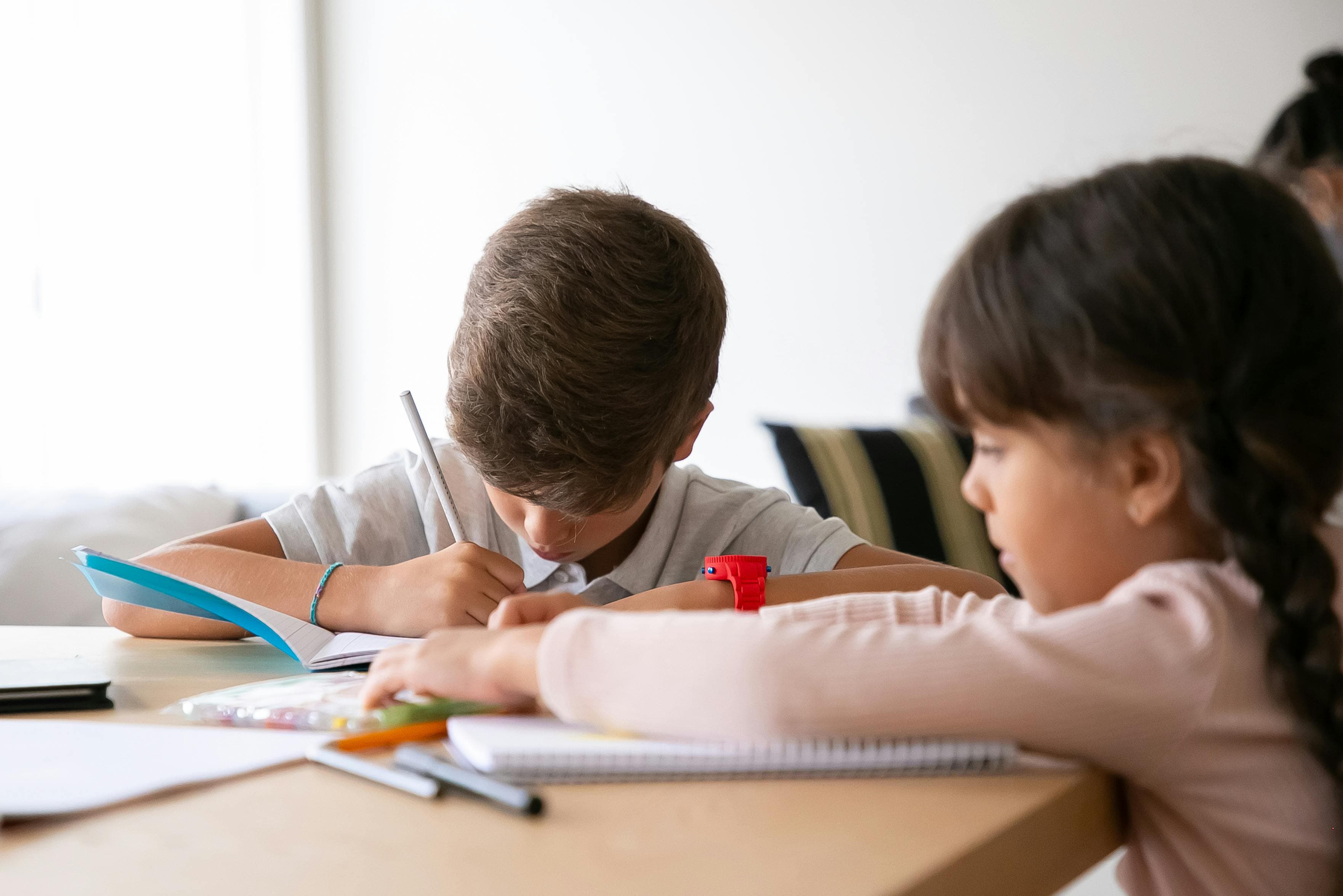
Educational Activities for Kids at Home: Sorted by Age, Skill, and Prep Time So You Can Pick the Right One Fast
Transform everyday moments into learning opportunities with age-appropriate educational activities for kids at home that require minimal preparation.
Quick Summary
Transform everyday moments into learning opportunities with age-appropriate educational activities for kids at home that require minimal preparation. This guide organises activities by developmental stage and skill area, helping busy parents choose the right activity quickly while building essential cognitive, motor, and social-emotional skills.
Why Structured Home Learning Works: The Science Behind Play-Based Development

Educational activities for kids at home aren't just time-fillers—they're powerful tools for cognitive development. Research from the Centre for Science and Policy demonstrates that purposeful play-based learning significantly enhances children's executive function, self-regulation, and academic readiness.
The difference between structured learning activities and passive entertainment lies in intentional skill-building. When children engage in guided exploration—whether through cooking measurements or storytelling with props—their brains actively form neural pathways that support problem-solving, creativity, and social development.
Home learning activities work because they connect abstract concepts to tangible experiences. A child measuring ingredients for cookies isn't just helping in the kitchen; they're developing mathematical reasoning, following sequential instructions, and understanding cause-and-effect relationships. This multi-sensory approach reinforces learning far more effectively than screen-based activities alone.
Age-Specific Activity Frameworks: Matching Development to Learning
Understanding your child's developmental stage helps you choose activities that challenge but don't overwhelm. Refer to the American Academy of Pediatrics milestone guidelines for clear, age-appropriate benchmarks.
Ages 3-5: Foundation Building Through Sensory Exploration
Preschoolers thrive with activities that build: - Fine motor skills: Threading large beads, playdough manipulation, finger painting - Language foundations: Rhyming games, simple story creation, vocabulary building through everyday objects - Sensory exploration: Water play, texture bins, nature collections - Social-emotional development: Turn-taking games, emotional identification activities
These activities typically require 15-30 minutes and minimal materials. Consider educational gifts for this age group that support structured learning goals.
Ages 6-8: Building Literacy and Numeracy Foundations
Early elementary children benefit from activities that foster: - Reading comprehension: Chapter book discussions, reading comprehension games - Mathematical thinking: Pattern recognition, basic addition through manipulatives - Independent thinking: Choice-based activities, problem-solving challenges - Academic skills: Handwriting practice, spelling games, basic research projects
As attention spans grow, activities can extend to 45-60 minutes.
Ages 9-11: Complex Problem-Solving and Self-Direction
Older elementary children excel with: - Advanced creativity: Multi-step projects, original story writing, complex art techniques - Critical thinking: Science experiments, logic puzzles, research presentations - Self-directed learning: Independent project choices, goal-setting activities - Real-world applications: Budget planning, time management, community problem-solving
These comprehensive projects may span multiple days or weeks.
Literacy and Language Activities: Building Communication Skills at Home
Transform everyday moments into literacy-building opportunities through engaging, hands-on activities that make reading and writing purposeful.
Story creation using household props develops narrative skills and vocabulary simultaneously. Gather random objects—a wooden spoon, a sock, a toy car—and challenge children to weave them into an original tale. This activity builds sequencing skills, creative thinking, and oral language development.
Word games using kitchen items make phonics practice tangible. Sort pasta shapes by beginning sounds, create alphabet soup with letter noodles, or play "I Spy" focusing on specific phonetic patterns during meal preparation.
Combining writing and drawing activities supports different learning styles while developing fine motor skills. Children can create illustrated journals, design comic strips, or write instructions for their favourite games. Personalised learning materials significantly enhance engagement by making children the central characters in their learning journey.
Family storytelling traditions—sharing memories, creating collaborative stories, or retelling favourite books with personal twists—build comprehension skills while strengthening family connections. These activities require no special materials but create lasting memories alongside academic growth.
Hands-On Numeracy and Problem-Solving: Math Without Worksheets
Mathematics becomes meaningful when children encounter it through real-world applications that connect abstract concepts to tangible experiences.
Cooking and baking provide natural measurement and fraction practice. Doubling recipe quantities, measuring ingredients, and dividing portions into equal shares makes mathematical concepts immediately relevant. Children learn conversions, timing, and proportional reasoning while creating something delicious.
Household organisation becomes pattern recognition and categorising practice. Sorting laundry by colour, organising books by size, or arranging toys by attributes develops classification skills essential for later mathematical thinking. Create sorting challenges using buttons, coins, or craft supplies.
Building and construction activities develop spatial reasoning through hands-on manipulation. Using blocks, cardboard boxes, or recycled materials, children explore geometry, balance, and engineering principles. Challenge them to build structures that meet specific criteria—tallest tower, strongest bridge, or most creative design.
Money games and budgeting activities connect mathematics to life skills. Create pretend stores using household items, plan family outings within budget constraints, or track savings goals using visual charts. These activities build numerical fluency alongside financial literacy.
Science and Discovery Activities: Simple Experiments with Big Learning

Kitchen science transforms everyday cooking into exploration of chemical reactions, states of matter, and scientific observation. Mix baking soda and vinegar to explore acid-base reactions, freeze different liquids to compare freezing points, or observe how oil and water interact in various containers.
Nature observation projects develop scientific thinking through systematic documentation. Create weather tracking charts, maintain plant growth journals, or document seasonal changes through photographs and measurements. These long-term projects build patience and analytical thinking.
Simple physics demonstrations using household materials make abstract concepts concrete. Explore magnetism using refrigerator magnets and various materials, investigate gravity and motion through ramp experiments, or examine light and shadows using flashlights and different objects.
Seasonal science activities connect learning to natural cycles. Study snowflake formation in winter, track plant growth in spring, explore evaporation rates in summer, or investigate decomposition in autumn. These activities build understanding of natural systems while encouraging outdoor exploration.
Creative and Fine Motor Development: Art with Purpose
Artistic activities support developmental milestones while building creative confidence through purposeful skill-building rather than generic craft projects.
Drawing and colouring activities that build pre-writing skills include tracing exercises, connect-the-dot puzzles, and guided drawing lessons focusing on shapes and patterns. These activities strengthen hand muscles and develop hand-eye coordination essential for writing readiness.
Targeted craft projects develop specific motor skills through engaging activities. String beading improves pincer grasp, clay manipulation strengthens hand muscles, and cutting practice with safety scissors builds bilateral coordination. Personalised colouring books combine creative expression with self-recognition, making artistic activities more engaging and meaningful.
Sculpture and building activities promote three-dimensional thinking through hands-on manipulation of materials. Using playdough, clay, or recycled materials, children explore spatial relationships, symmetry, and structural engineering while developing fine motor control.
Mixed-media projects that combine drawing, writing, and construction support different learning styles while building complex thinking skills. Create family newspapers, design board games, or build dioramas that tell stories through multiple artistic elements.
Screen-Free Independent Activities: Building Self-Reliance
Developing children's ability to engage in purposeful learning without constant adult supervision builds confidence and self-direction while giving parents necessary breaks.
Self-checking activities include puzzle completion, pattern matching games, and simple coding activities using physical materials. Design activity boxes with clear instructions and built-in success indicators so children can verify their progress independently.
Quiet time activities accommodate different attention spans while maintaining learning focus. Create reading nooks with appropriate books, establish art stations with rotating materials, or design thinking games that children can complete at their own pace.
Activity stations promote independent exploration through thoughtful environmental design. Rotate materials weekly to maintain novelty—a nature exploration kit one week, a building challenge the next. Clear organisation and simple instruction cards help children navigate activities confidently.
Progressive challenge systems allow children to advance through increasingly complex versions of favourite activities, building mastery while maintaining engagement. Start with simple sorting, progress to complex categorisation, then advance to creating their own sorting systems.
Smart Screen Time: The 3-6-9-12 Rule and Digital Balance
Balancing digital and hands-on learning requires thoughtful integration rather than complete elimination of technology from children's educational experiences.
The American Academy of Pediatrics screen time guidelines recommend no screens before age 2, limited high-quality content ages 2-5, and consistent limits with educational priority thereafter. The 3-6-9-12 rule provides practical framework: no screens before 3, no consoles before 6, no internet before 9, and supervised social media after 12.
Educational content should complement hands-on learning rather than replace it. Choose programmes that encourage active participation, pause for discussion, or inspire follow-up activities. Document nature walks with photography apps, use measurement apps during cooking, or research topics sparked by hands-on exploration.
Balancing digital and physical activities throughout the day maintains engagement while preventing overstimulation. Alternate screen-based research with hands-on experimentation, follow digital storytelling with physical story creation, or use apps to enhance rather than replace manipulative mathematics.
Conclusion
Creating meaningful educational experiences at home doesn't require expensive materials or extensive preparation. By matching activities to your child's developmental stage and focusing on skill-building through play, everyday moments become powerful learning opportunities. Start with one age-appropriate activity from each skill area, observe your child's interests and abilities, and gradually build a personalised learning routine that fits your family's schedule and values.
Frequently asked questions
What educational activities work best for different age groups at home?+
Ages 3-5 benefit from sensory exploration activities like playdough, water play, and simple cooking tasks. Ages 6-8 thrive with reading games, basic science experiments, and creative projects. Ages 9-11 excel with complex building challenges, research projects, and self-directed learning activities.
How can I create educational activities with minimal preparation time?+
Focus on everyday materials and situations. Use cooking for math practice, household items for science experiments, and storytelling during car rides. Create activity boxes with rotating materials, prepare simple instruction cards, and establish learning routines that require minimal setup.
Which activities build multiple skills simultaneously?+
Cooking develops math, reading, science, and life skills. Art projects combine fine motor development, creativity, and academic concepts. Building activities integrate spatial reasoning, problem-solving, and engineering thinking. Storytelling builds literacy, creativity, and social-emotional skills.
How do I balance screen time with hands-on learning activities?+
Follow age-appropriate guidelines: limited screens before age 6, educational content priority, and consistent daily limits. Use technology to enhance hands-on activities rather than replace them. Alternate digital and physical activities, and choose interactive content that encourages real-world application.
What household items work well for educational activities?+
Kitchen supplies offer math and science opportunities: measuring cups, mixing bowls, and timers. Office supplies support literacy and fine motor development: paper, markers, and staplers. Recycled materials become building challenges: cardboard boxes, containers, and fabric scraps. Nature items inspire exploration: leaves, rocks, and water.
Create a personalised colouring book from £18.99
Your child as the star. Printed and delivered. Digital PDF included.
Start My Book