
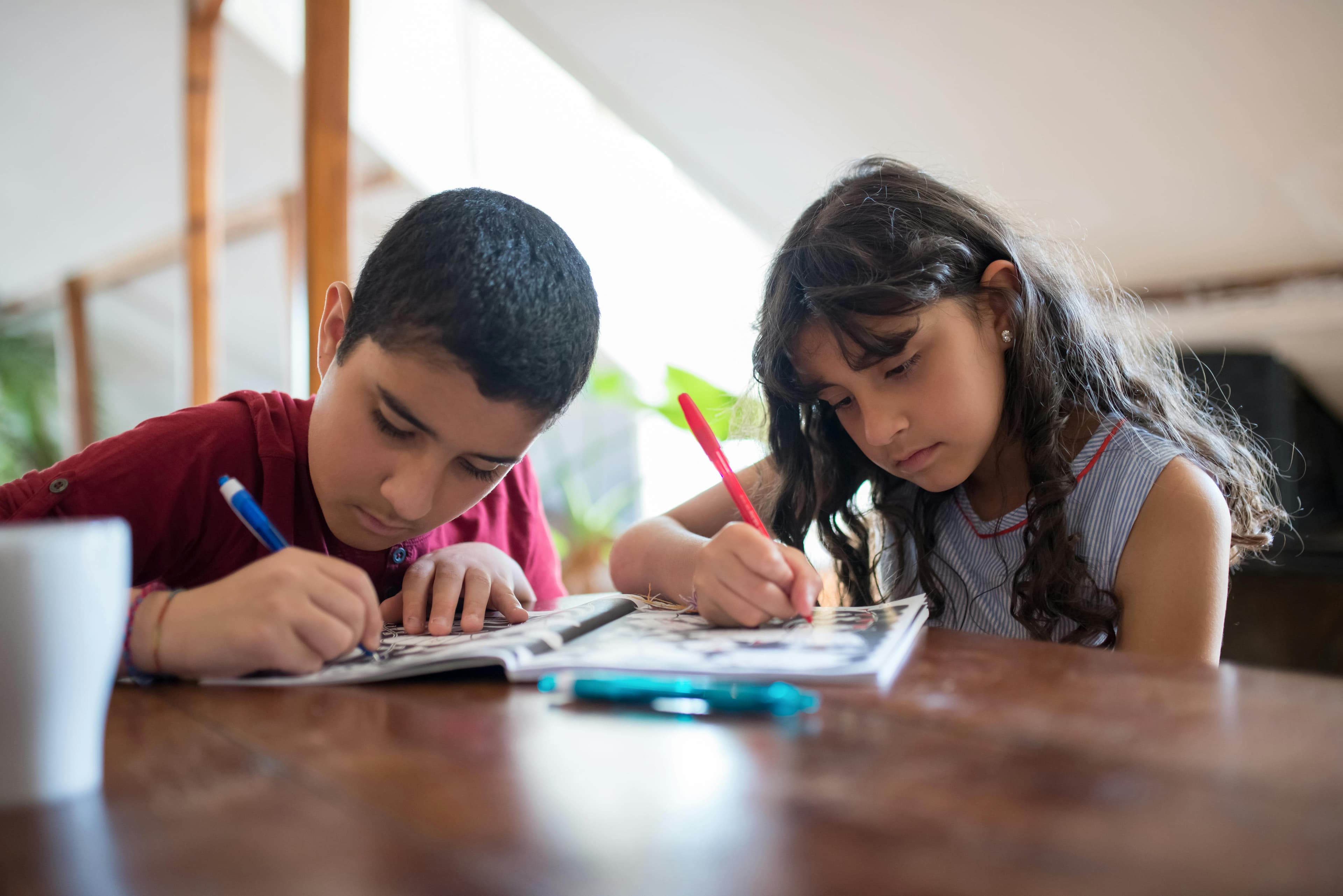
Does Colouring Help Anxiety in Kids? What the Evidence Says and How to Use It
Colouring can help reduce anxiety in many children by activating focused attention and calming the nervous system. However, effectiveness varies by age, personality, and anxiety type. It's not suitable for all kids and shouldn't replace professional support for clinical anxiety disorders.
Quick Summary
Research shows colouring can moderately reduce anxiety in many children by activating focused attention and calming the nervous system. However, effectiveness varies by age, personality, and anxiety type. It's not suitable for all kids and shouldn't replace professional support for clinical anxiety disorders.
Introduction

Many parents notice their children seem calmer and more settled after a colouring session, leading to an important question: does colouring help anxiety in kids, or is this just wishful thinking? If you've watched your child's shoulders relax as they fill in a picture, you're observing something real—but the full answer is more nuanced than a simple yes or no.
This article examines the scientific evidence behind colouring as an anxiety management tool for children, exploring both when it works effectively and when it doesn't. We'll cover the research findings, explain the brain science in simple terms, and provide practical guidance for using colouring strategically at home. Most importantly, we'll help you understand whether colouring is right for your specific child and situation.
Does Colouring Actually Help Anxiety in Kids? The Direct Answer
Yes, colouring can help reduce anxiety in many children, but it comes with important caveats that every parent should understand. Research on art therapy interventions demonstrates measurable anxiety reduction in children through focused creative activities, including structured colouring tasks.
However, the effectiveness depends heavily on three key factors: your child's age and developmental stage, their individual personality and anxiety triggers, and the type of anxiety they're experiencing. Colouring works best for general worry, overstimulation, and transitional stress rather than severe clinical anxiety disorders.
The activity creates what researchers call "focused attention," which helps shift the brain away from anxious thoughts toward a concrete, manageable task. This isn't just distraction—it's actively training the nervous system to regulate itself through repetitive, purposeful movement.
That said, colouring isn't a magic solution. Some children find it frustrating rather than calming, particularly those with perfectionist tendencies or fine motor challenges. For children with trauma-based anxiety or diagnosed anxiety disorders, colouring should complement—never replace—professional therapeutic support. The NHS guidance on childhood anxiety emphasises that persistent anxiety symptoms require proper assessment and treatment.
What the Research Says: Studies on Colouring and Child Anxiety
Scientific studies specifically examining colouring's impact on childhood anxiety show promising but measured results. Art therapy research indicates that structured creative activities, including colouring, can reduce cortisol levels and decrease observable anxiety behaviours in children aged 4-12.
The most robust studies measure outcomes through multiple indicators: physiological markers like heart rate variability, behavioural assessments by trained observers, and self-reported anxiety levels in older children. These studies consistently show mild to moderate anxiety reduction during and immediately after colouring sessions.
However, researchers emphasise several limitations. Most studies have relatively small sample sizes and short-term follow-up periods. The anxiety reduction observed typically lasts 30-60 minutes after the activity ends, suggesting colouring works best as an in-the-moment coping strategy rather than a long-term intervention.
Additionally, the research shows significant individual variation. Approximately 70% of children in studies experienced some anxiety reduction from colouring, while 30% showed no measurable benefit or occasionally increased stress levels. This highlights the importance of observing your individual child's response rather than assuming universal effectiveness.
How Colouring Calms the Brain: The Science Made Simple

Understanding why colouring can reduce anxiety helps parents use it more effectively. When children engage in focused colouring, several calming mechanisms activate simultaneously in their developing brains.
The primary effect occurs in the amygdala—the brain's alarm system that triggers anxiety responses. Neuroimaging research reveals that focused creative activities like colouring can shift brain activity away from the amygdala toward regions associated with concentration and present-moment awareness.
The repetitive hand movements required for colouring create bilateral brain stimulation, activating both brain hemispheres in a coordinated pattern. This bilateral activation helps integrate emotional and logical processing, naturally calming the nervous system.
Finally, colouring can induce what psychologists call a "flow state"—a condition of complete absorption in an activity. During flow states, anxiety-producing thoughts naturally fade as attention becomes fully occupied with the task at hand. For children, this represents a natural form of mindfulness practice that doesn't require complex instructions or sustained concentration skills.
When Colouring Might NOT Help: Important Limitations
While many children benefit from colouring, it's crucial to recognise when this strategy may backfire or prove ineffective. Perfectionist children often experience increased stress when colouring, becoming frustrated with staying within lines or achieving specific colour combinations. If you notice your child erasing frequently, becoming upset about "mistakes," or avoiding colouring altogether, this approach may not suit their temperament.
Children with fine motor difficulties or sensory sensitivities may find colouring physically challenging or overwhelming rather than calming. NHS guidance on fine motor development indicates that forcing children to engage in activities beyond their developmental capacity can increase anxiety rather than reduce it.
Some children require more active, physical regulation strategies to manage anxiety effectively. Kids who are naturally kinesthetic learners or who experience anxiety as physical restlessness may find sitting still for colouring sessions counterproductive. These children often respond better to movement-based activities like jumping, dancing, or outdoor play.
Most importantly, children experiencing anxiety related to trauma, abuse, or diagnosed anxiety disorders need professional therapeutic support. While colouring can complement therapy, it should never substitute for appropriate clinical intervention. Watch for signs that colouring increases rather than decreases stress: resistance to the activity, increased agitation during colouring, or expressions of frustration that seem disproportionate to the task.
Age-by-Age Guide: How Colouring Helps Different Ages

Colouring's anxiety-reducing benefits manifest differently across developmental stages, requiring age-appropriate approaches and realistic expectations.
Ages 3-5: At this stage, large motor movements and sensory exploration matter more than precision. Provide chunky crayons, large colouring pages with simple shapes, and focus on the physical satisfaction of making marks rather than staying within lines. The calming effect comes primarily from the sensory input and gross motor engagement. Thoughtful gifts for young children often include age-appropriate art supplies that support both development and emotional regulation.
Ages 6-9: School-age children can handle more detailed colouring while using the activity for emotional expression. Story-based colouring pages work particularly well, allowing children to project their feelings onto characters or scenes. This age group benefits from colouring books that combine simple mindfulness concepts with engaging imagery, helping them learn to notice and name their emotions.
Ages 10-12: Pre-adolescents respond well to complex patterns, mandala-style designs, and colouring activities explicitly linked to mindfulness practices. They can understand the connection between focused attention and emotional regulation, making them active participants in using colouring as a coping strategy rather than just a distraction.
Each age group requires different materials, time commitments, and environmental considerations to maximise anxiety reduction benefits while respecting developmental capabilities.
How to Use Colouring for Anxiety at Home: Practical Implementation
Strategic timing makes colouring most effective for anxiety management. Introduce colouring during predictable stress periods: after school when children feel overstimulated, before bedtime to promote calm transitions, or during emotional meltdowns when children need immediate grounding strategies.
Choose colouring materials thoughtfully. Mandala designs work well for children who respond to repetitive patterns, while nature scenes suit kids who find outdoor imagery calming. Free drawing opportunities allow for emotional expression, whereas structured colouring pages provide containment and predictability. Personalised colouring books can significantly increase engagement by featuring your child's name, favourite characters, or family photos integrated into colouring designs.
Create a designated calm colouring environment: good lighting, comfortable seating, minimal distractions, and easy access to materials. Establish this as a special space associated with feeling safe and peaceful rather than just another activity area.
Frequency matters more than duration. Short, regular colouring sessions (10-15 minutes) prove more beneficial than occasional lengthy periods. Avoid turning colouring into a chore by mandating daily sessions; instead, offer it as an available option when children need emotional regulation support.
Consider personalised gifts that incorporate colouring elements, as personalisation increases emotional connection and engagement with anxiety-reducing activities.
Colouring vs Other Natural Anxiety Strategies: What Works When
Colouring represents just one tool in a comprehensive anxiety management toolkit. Compared to breathing exercises, colouring requires less instruction and works well for children who struggle with abstract concepts like "deep breathing." However, breathing techniques provide more immediate anxiety relief and can be used anywhere without materials.
Physical activity often proves more effective than colouring for children whose anxiety manifests as restlessness or excess energy. Running, jumping, or dancing provides the movement-based regulation these children need, while colouring might feel restrictive.
Journaling works better than colouring for older children (ages 8+) who benefit from processing emotions through words rather than images. However, many children find writing more challenging than visual expression, making colouring more accessible.
The most effective approach combines multiple strategies based on your child's specific needs, anxiety triggers, and personal preferences. Colouring works best when paired with other calming activities: listening to soft music while colouring, practicing breathing techniques during colouring breaks, or transitioning from active play to quiet colouring time.
Building this comprehensive toolkit ensures you have appropriate strategies for different situations, times of day, and anxiety intensity levels.
Conclusion
Colouring can genuinely help reduce anxiety in many children, but it's not a universal solution. The key lies in understanding your individual child's needs, implementing the strategy thoughtfully, and maintaining realistic expectations about its role in anxiety management. When used appropriately alongside other coping strategies and professional support when needed, colouring becomes a valuable tool for helping children develop emotional regulation skills that serve them throughout life.
Frequently asked questions
Can colouring replace therapy for anxious children?+
No, colouring should never replace professional therapy for children with diagnosed anxiety disorders or trauma-related anxiety. While colouring can complement therapeutic treatment and provide useful coping skills, persistent or severe anxiety requires proper clinical assessment and intervention.
How long should children colour to see anxiety benefits?+
Most children experience anxiety reduction within 10-15 minutes of focused colouring. However, the benefits are typically short-term, lasting 30-60 minutes after the activity ends. Regular, brief sessions prove more effective than occasional long periods.
What if my child gets frustrated while colouring?+
If colouring increases frustration rather than reducing anxiety, discontinue the activity immediately. Some children, particularly perfectionists or those with fine motor challenges, find colouring stressful. Try alternative calming strategies like physical movement, music, or sensory activities instead.
Are there specific types of colouring pages that work better for anxiety?+
Mandala and repetitive pattern designs often work well for anxiety reduction due to their predictable, rhythmic nature. However, individual preferences vary significantly. Some children prefer nature scenes, others respond to simple geometric shapes, and some benefit from story-based colouring pages that allow emotional expression.
At what age can children start using colouring for anxiety management?+
Children as young as 3 can benefit from colouring as an anxiety-reducing activity, though expectations and materials must be age-appropriate. Toddlers need large crayons and simple shapes, while older children can handle detailed designs and understand the connection between colouring and emotional regulation.
Should I colour with my child or let them do it alone?+
This depends on your child's personality and current anxiety level. Some children find parental presence comforting and enjoy shared colouring time, while others need independent space to process emotions. During acute anxiety episodes, gentle companionship often helps, but during regular practice, independence can build confidence and self-regulation skills.
Create a personalised colouring book from £18.99
Your child as the star. Printed and delivered. Digital PDF included.
Start My Book